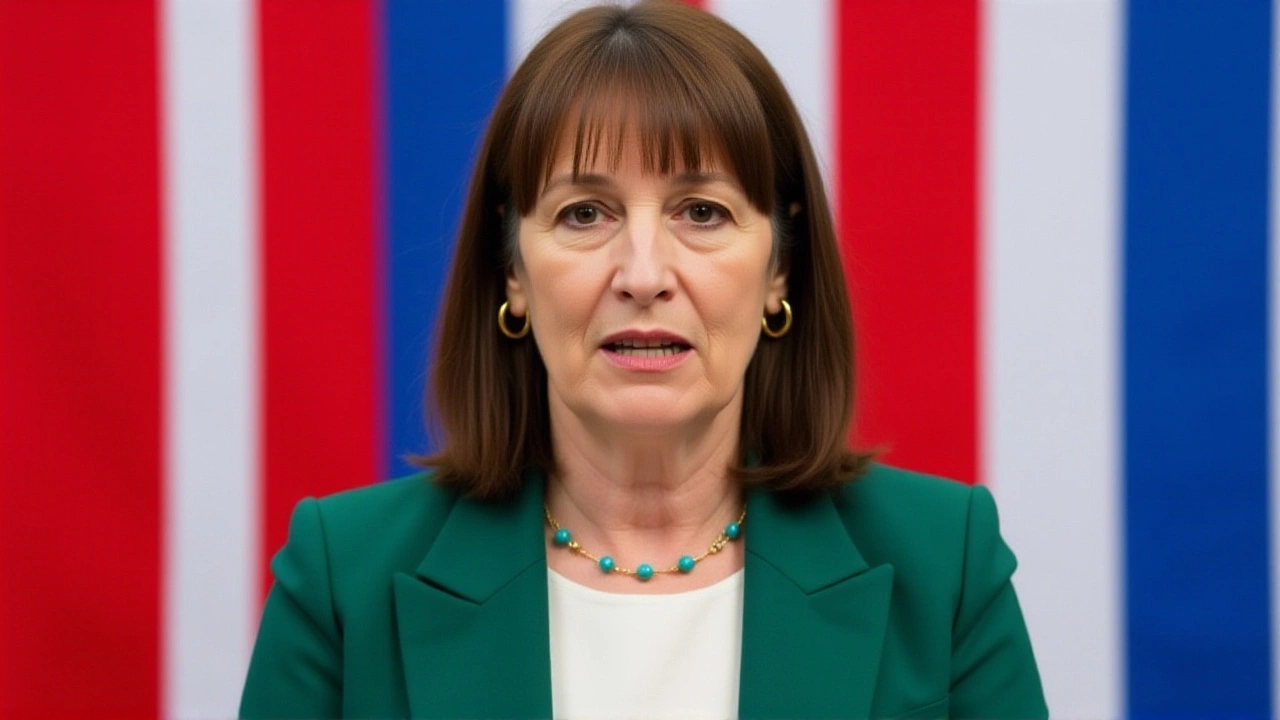
When Rachel Reeves stood before the House of Commons on March 17, 2025, she didn’t just present a budget — she lit a fuse. Her £5-6 billion welfare cut plan, designed to boost defence spending without raising taxes, ignited a firestorm within her own party. By July, it was in ruins. The Department for Work and Pensions had drawn up sweeping changes to Personal Independence Payment — a lifeline for 3.5 million disabled people — but the backlash was immediate, visceral, and impossible to ignore.
The Shock of the Spring Statement
Reeves’ March 2025 Spring Statement was meant to be the cornerstone of Labour’s economic reset. After winning a landslide in July 2024, the party had promised to restore fiscal credibility. But growth stalled. Inflation clung to 3.8%. Government bond yields spiked to 4.6%, the highest since 2008. Reeves’ October 2024 budget had already disappointed markets. Now, she doubled down: slash welfare, protect defence, no new taxes. The message was clear: austerity was back — but this time, it wore Labour’s colours. The cuts targeted everything: freezes on Local Housing Allowance (LHA), which would have left 1.2 million private renters worse off by an average of £28 a month; tighter eligibility for Personal Independence Payment; and the abolition of at least seven quangos, including the Equality and Human Rights Commission’s regional panels. The Office for Budget Responsibility warned the savings were "highly contingent" on unrealistic employment projections.Labour’s Internal Uprising
What made this different from 2010 wasn’t just the scale — it was who was screaming. Former leadership contender Rachael Maskell, MP for York Central, called the PIP changes "draconian and cruel." Diane Abbott, MP for Hackney North, declared bluntly: "Cutting disability benefits is not a Labour thing to do." Even John McDonnell, once the hard-left voice of the party, joined the chorus, calling the plan "a betrayal of our founding values." The revolt wasn’t just rhetorical. Over 40 Labour MPs signed a letter demanding the withdrawal of the PIP changes. Whips were flooded with calls. One backbencher told a reporter, "I’ve had constituents in tears. My phone hasn’t stopped since the statement. I can’t vote for this." Meanwhile, Liz Kendall, the Work and Pensions Secretary, pushed forward with a green paper — her boldest reform since 2012 — but even she privately admitted the timing was "politically toxic."The Reversal: A Fiscal Black Hole
By early July, the pressure became unbearable. Prime Minister Keir Starmer summoned Reeves to 11 Downing Street. The message: "We can’t afford the political cost." The reversal was announced quietly on July 8, 2025. The PIP eligibility changes were shelved indefinitely. Existing Universal Credit claimants were protected from benefit caps. The Office for Budget Responsibility confirmed the revised package delivered zero net savings. The £6 billion hole remained. Defence spending? Still rising. Tax rises? Still off the table. "It’s a mess," said one senior Treasury official, speaking anonymously. "We spent months designing a plan. Then we spent three months undoing it. And we’re no better off."
Why This Matters Beyond the Numbers
This wasn’t just about money. It was about identity. Labour spent a decade rebuilding trust after the austerity years. Reeves’ plan threatened to erase that progress overnight. For many voters — especially in post-industrial towns where disability rates are high and jobs are scarce — benefits aren’t a burden. They’re survival. The Conservatives, meanwhile, were quick to pounce. Shadow Chancellor Mel Stride called it "a catastrophic failure of leadership," but even they couldn’t fully capitalize. Their own support for the cuts made them look opportunistic, not principled. The real casualty? Credibility. Reeves had promised "economic patriotism" — a new model of growth. Instead, she delivered a policy that looked like old Labour’s worst fears. And now, with inflation still sticky and public debt at 98% of GDP, the government has no plan B.What’s Next? The Invisible Crisis
The government has launched a review led by Stephen Timms, the Minister for Disabled People. But with no new funding in sight, the review is widely seen as a stalling tactic. Meanwhile, food bank use has climbed 17% since March in areas hardest hit by the LHA freeze — even before the reversal. Economists are now warning of a "lost year." The Office for Budget Responsibility projects a £3.2 billion shortfall in the 2026-27 fiscal cycle unless new revenue streams are found. And with the next budget due in October, the pressure is mounting. Reeves has ruled out a wealth tax — but with Labour’s poll numbers slipping, that may change.
Background: The Ghosts of Austerity
The last time the UK cut welfare by this magnitude was under George Osborne, 2010–2015. Benefits fell by 20% in real terms. Child poverty rose. Life expectancy stalled. The scars are still visible in places like Middlesbrough, Hull, and Liverpool. Labour’s 2024 manifesto explicitly rejected a return to austerity. Reeves’ original plan, drafted by her chief economic adviser, Richard Hughes, was supposed to be "smart austerity" — targeting fraud, not need. But the data on fraud was thin. The human cost? Very real.Frequently Asked Questions
How did the welfare cuts affect disabled people before the reversal?
Before the July reversal, proposed changes to Personal Independence Payment would have removed support from an estimated 300,000 claimants, primarily those with fluctuating conditions like chronic pain or mental illness. Many faced losing £100–£150 per month — a lifeline for those unable to work. Charities like Scope and Disability Rights UK reported a 40% spike in crisis calls in April and May 2025.
Why did Labour MPs oppose cuts they once supported?
Many Labour MPs, especially those in constituencies with high disability rates, saw the cuts as a betrayal of the party’s social justice roots. Unlike the 2010s, today’s Labour base is more diverse and socially conscious. Polling by YouGov showed 68% of Labour voters opposed PIP changes, even among those who supported fiscal discipline. The fear wasn’t just political — it was moral.
What’s the current state of the UK’s fiscal position after the reversal?
The Office for Budget Responsibility confirmed the revised welfare package delivers no savings, leaving a £6 billion gap in the 2025-26 fiscal plan. With inflation still above target and borrowing costs rising, the government has no new revenue sources lined up. The Chancellor now faces a choice: raise taxes, cut defence, or risk a downgrade from credit agencies — all politically toxic options.
Is there any chance of a wealth tax being introduced?
Rachael Reeves has publicly ruled out a wealth tax, but internal Labour discussions suggest growing pressure to reconsider. A 1% tax on assets over £2 million could raise £12 billion annually, according to the Institute for Fiscal Studies. With the welfare gap unfilled and public anger rising, even moderate MPs are quietly asking whether the party can afford to say no.
How did the public react to the reversal?
Public reaction was largely relief — but also disillusionment. A Guardian-Ipsos poll in mid-July showed 59% of respondents believed the government "couldn’t make up its mind." Yet 71% approved of the reversal itself. The problem isn’t the policy change — it’s the chaos. Voters are losing confidence that Labour can govern with clarity or competence.
What’s the long-term impact on Labour’s political brand?
The episode has damaged Labour’s claim to be the party of fairness. For a generation that lived through austerity, this felt like déjà vu. Even if the reversal saves votes in the short term, the perception that Labour is torn between pragmatism and principle could haunt it for years. The party’s 2029 prospects now hinge on whether it can rebuild trust — not just with voters, but with its own MPs.
 Entertainment